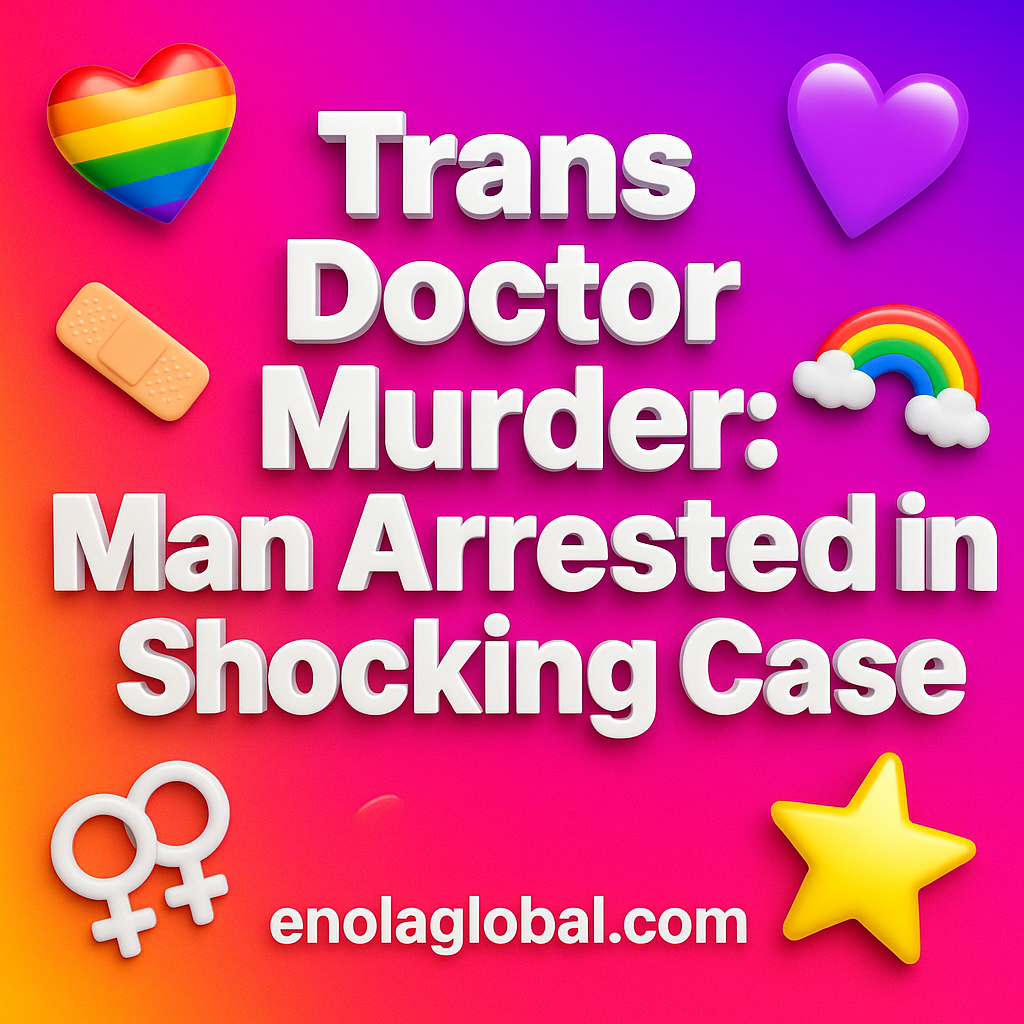
The arrest in the trans doctor murder case has sent shockwaves through the community, revealing a grim intersection of violence and politicized hate. The victim, known for vocal support of the president’s anti-transgender crusade, was targeted in a crime that raises urgent questions about safety and justice for marginalized groups. This post dissects the key facts of the case, explores the victim’s controversial activism, and examines how political rhetoric may have fueled this deadly attack. With authorities confirming the arrest just days after the incident, the story unfolds against a backdrop of escalating national tensions around transgender rights.
What Are the Key Facts of the Trans Doctor Murder Case?
The trans doctor murder case centers on a physician widely known for their public stance against transgender rights, closely aligned with the president’s controversial policies. The victim was fatally attacked in what authorities have described as a targeted killing. Police swiftly arrested a suspect believed to have a direct motive linked to the victim’s activism. While details remain under investigation, evidence suggests the crime was premeditated and motivated by deep political and social tensions. The arrest has put a spotlight on how divisive rhetoric can escalate into deadly violence.
Official statements confirm the suspect was apprehended within days of the incident, highlighting the urgency of the response. Investigators are now focusing on possible connections between online hate communities and the violent act. This case serves as a grim reminder of the volatile environment surrounding transgender issues in the country. For further legal context, see the Department of Justice.
How Did the Victim’s Anti-Trans Activism Influence the Attack?
The victim’s staunch support of anti-transgender policies made them a polarizing figure, intensifying the animosity that might have led to the attack. Their activism was not subtle—they frequently appeared in media interviews and social platforms endorsing restrictive legislation against transgender individuals. Such visibility, while boosting their public profile, may have increased their risk by fueling anger within transgender and ally communities.
The choice of target in the trans doctor murder reflects how political activism can provoke violent backlash. Although no violence is justifiable, the victim’s outspoken positions created an environment where hostile actors felt justified. Experts warn that highly charged activism on sensitive issues requires layered protections to prevent tragedies from erupting.
Why Is Political Rhetoric Linked to Violence Against Trans People?
Political rhetoric often shapes public perceptions and social norms, making language a powerful catalyst for either inclusion or violence. In this case, inflammatory speeches and policies labeling transgender people as threats have normalized hostility and dehumanization. This creates a climate ripe for hate crimes, including the trans doctor murder. Studies confirm the correlation between harsh rhetoric and spikes in anti-trans violence—words can embolden extremists to act.
When leaders use divisive language, it legitimizes discrimination in everyday interactions and law enforcement responses. Consequences include reduced reporting of hate crimes and lesser community trust. For an in-depth analysis, the Human Rights Campaign offers comprehensive data on this troubling dynamic.
What Legal Actions Follow the Arrest in the Trans Doctor Murder?
After the arrest in the trans doctor murder case, prosecutors have moved quickly to file multiple charges, including first-degree murder and hate crime enhancements. The inclusion of hate crime charges emphasizes the alleged bias-driven motive and signals a determination to pursue justice vigorously. Pretrial hearings are scheduled soon, where evidence related to motive and premeditation will be examined in detail.
Legal experts anticipate the court will face challenges balancing community demands for accountability with strict adherence to due process. Defense teams may argue political motivations were misinterpreted, but prosecutors have stressed the strength of the case under existing hate crime legislation. Monitoring the trial will be crucial to understanding how the justice system responds to hate-driven homicides.
How Does This Case Impact Safety for Marginalized Communities?
The trans doctor murder case has sent a chilling message to marginalized groups, especially transgender individuals, about their vulnerability in an increasingly hostile climate. It exposes gaps in protection, highlighting how targeted violence can emerge from politicized divisions. Many community members now express heightened fears for personal safety and question whether law enforcement can adequately shield them when political tensions escalate.
This tragedy compels advocacy organizations to renew calls for stronger hate crime laws and enhanced protective measures. Safety for marginalized groups is not only about individual vigilance but systemic change, including improved training for police and public awareness campaigns. The case also illustrates how intersectionality—where identity markers overlap—increases risk and necessitates tailored safety strategies.
What Can Communities Do to Prevent Hate-Fueled Violence?
Preventing violence like the trans doctor murder requires coordinated efforts from local leaders, law enforcement, and civil society. Communities must proactively address the root causes of hate by promoting education that fosters empathy, dismantling stereotypes, and creating safe spaces for dialogue. Early intervention programs targeting radicalization can also play a pivotal role.
- Implement anti-bias training in schools and workplaces
- Establish community watch groups to report hate incidents
- Encourage media outlets to avoid inflammatory language
- Support victim services providing counseling and legal aid
- Promote inclusive policies that affirm transgender rights
Building resilience against hate requires sustained commitment to inclusion and equity, countering the divisive narratives that often precipitate violence.
Is Justice Possible Amid Rising Tensions Over Transgender Rights?
Justice in the trans doctor murder case faces profound hurdles amid the polarized landscape of transgender rights. While legal systems can hold perpetrators accountable, broader societal reconciliation demands more than convictions. The battle over transgender rights feeds ongoing cultural conflicts that complicate perceptions of victimhood and culpability. Any outcome will be scrutinized through this fraught lens.
True justice also involves healing and systemic reform to prevent recurrence. This means addressing hate at its roots—and confronting political rhetoric that inflames divisions. Without a unified commitment to safeguarding dignity and rights, cases like this risk becoming tragic symbols of societal failure rather than catalysts for progress.
Final Reflection
The arrest in the trans doctor murder case underscores the devastating impact of inflammatory rhetoric and the urgent need for systemic protections for marginalized communities. As this case moves through the legal system, it highlights both the challenges and the possibilities for justice in a polarized climate. For continued updates on LGBTQ+ culture, accountability journalism, and queer history, follow our coverage at Enola Global News, and join the discussion where you can comment or like after engaging.