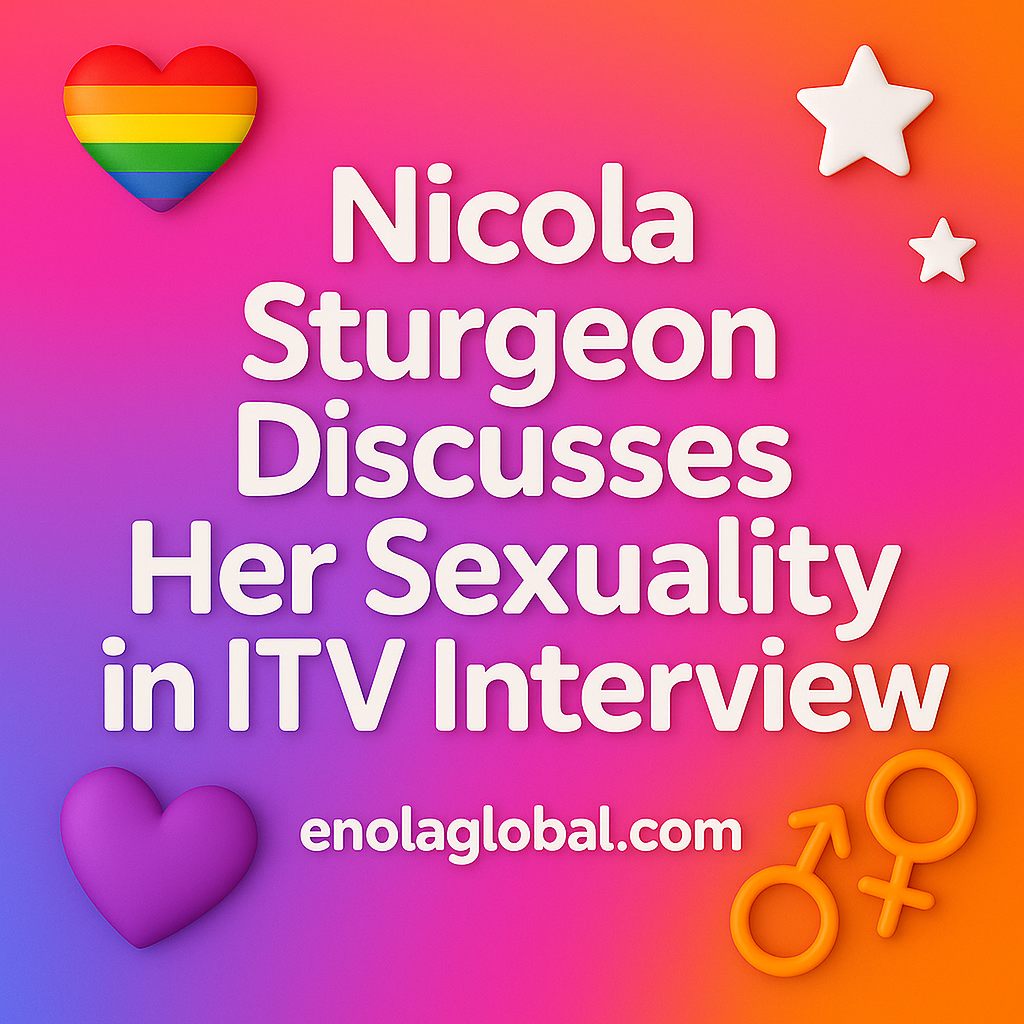
Nicola Sturgeon’s sexuality became a subject of discussion during an ITV interview and in her memoir, where Scotland’s former First Minister affirmed that sexuality is not binary and declined to adopt a label.
Rather than spectacle, Sturgeon used candour to reflect on identity, privacy, and politics — drawing a line against the culture of forcing labels where nuance belongs.
WHAT THE ITV INTERVIEW REVEALS ABOUT NICOLA STURGEON SEXUALITY
Speaking with ITV News, Sturgeon emphasized she was not making a “big revelation.” Instead, she resisted the pressure to define her life in neat categories.
Her words point to a broader truth: sexuality can be fluid, not confined to binaries. This fluidity is not diminished by past relationships, nor does it require public validation.
By declining a label, Sturgeon underscored complexity and self-determination. That choice is particularly radical in a culture where women in power are routinely asked to account for every aspect of their private lives.
This conversation around Nicola Sturgeon sexuality thus becomes a proxy for deeper debates about autonomy, dignity, and the right to private boundaries in public life.
DID NICOLA STURGEON “COME OUT”?
No. Sturgeon made clear she was not “coming out” or adopting any label. Instead, she restated that sexuality is not binary and stressed that her relationships remain private.
She also used the moment to reflect on politics: how insults and labels are weaponized, and why dignity matters in public discourse.
During her tenure, Sturgeon backed key equality measures — from marriage rights to trans recognition reforms — despite pushback from Westminster. Her leadership included navigating the legalization of equal marriage in Scotland and later championing the Gender Recognition Reform (Scotland) Bill, which was ultimately blocked under Section 35.
For reporting on her legislative record, see BBC News on Sturgeon’s equality milestones.
NICOLA STURGEON ON FUTURE RELATIONSHIPS
Having recently left a marriage, Sturgeon told ITV she isn’t rushing into anything new. Instead, she is focusing on independence and rediscovering herself outside public office.
This personal boundary also highlights a wider truth: the UK’s LGBTQ+ debates remain clouded by misinformation and stigma. Sturgeon admitted that, in hindsight, she might have paused earlier to address concerns about gender reform — but never at the expense of equality itself.
Her stance is unwavering: women’s rights and trans rights are not in conflict, a position supported by feminist and human rights groups alike.
WHY DISCUSSIONS ABOUT NICOLA STURGEON SEXUALITY MATTER
Conversations about Sturgeon’s sexuality matter because:
-
Media narratives shape policy — the way identity is framed influences how politicians legislate.
-
Visibility can empower or stigmatize — depending on whether it’s voluntary or coerced.
-
Respect for privacy sets democratic standards — public leaders deserve the same boundaries as any citizen.
Ultimately, Sturgeon’s refusal to sensationalize her private life is not evasion. It’s a democratic principle: that dignity, privacy, and rights come before voyeurism and rumor.
For LGBTQ+ readers, the message is empowering: identity requires no permission slip. For allies, it is a reminder to counter stigma with facts and compassion. And for institutions, it signals that rights should never be negotiable.