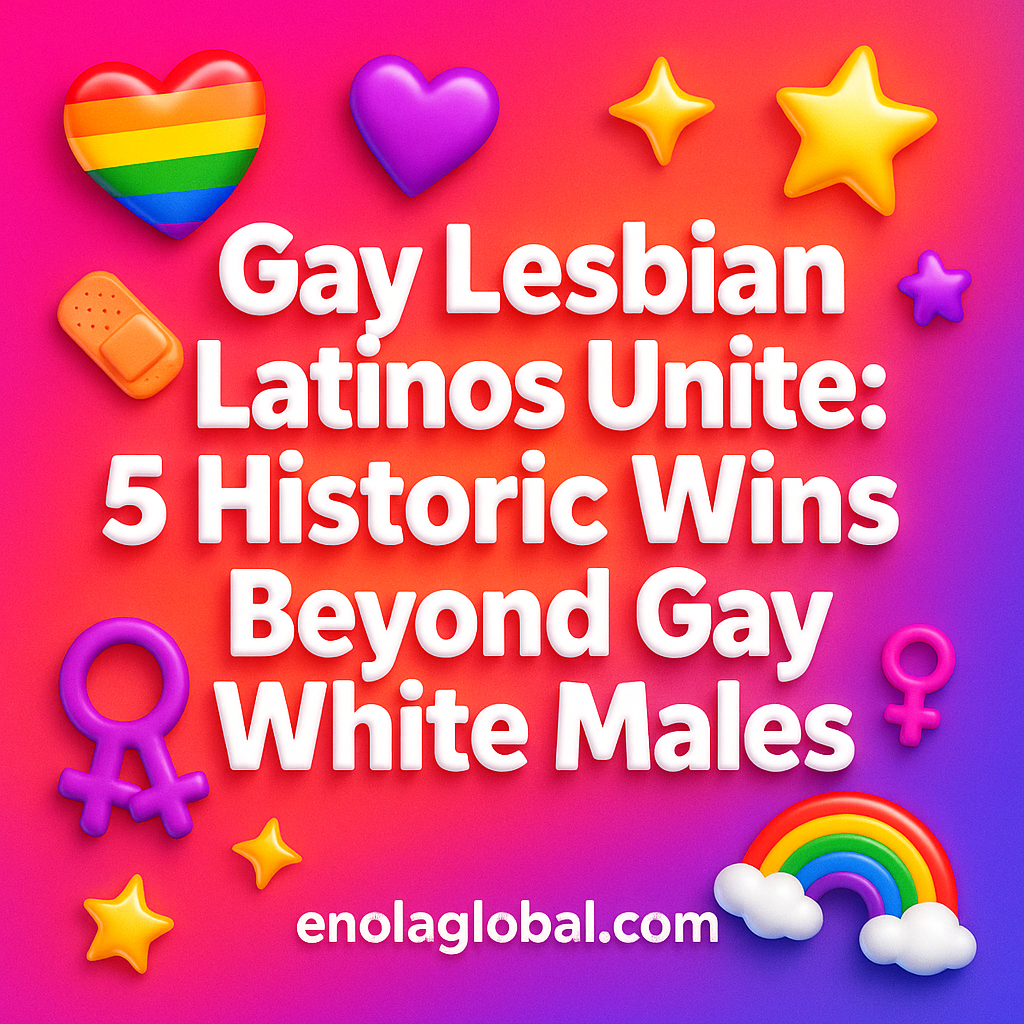
Since the 1970s, Gay Lesbian Latinos have shattered barriers beyond the predominantly white gay male narrative. Discover five historic wins that reshaped queer communities of color and advanced LGBTQ+ rights nationwide. These victories prove how queer Latinos made life better not just for themselves but for all marginalized groups. From pioneering activism to cultural breakthroughs, you’ll learn how their efforts created lasting change, including the founding of influential organizations like the National Latino AIDS Action Network. This post highlights the critical role of Gay Lesbian Latinos in making the world more just and inclusive—because when queers of color rise, we all move forward.
What Are the 5 Historic Wins of Gay Lesbian Latinos Since the 1970s?
Gay Lesbian Latinos achieved landmark victories that expanded visibility and rights beyond the dominant white gay male narrative. These include the founding of groundbreaking organizations such as the National Latino AIDS Action Network, which brought tailored community responses to the HIV/AIDS crisis among Latino LGBTQ+ populations. Another major win was the inclusion of intersectionality in LGBTQ+ advocacy, amplifying voices that were marginalized within queer spaces.
Other historic breakthroughs encompass political representation, with queer Latinos elected to public office, effectively shaping policies that reflected their communities’ realities. Cultural affirmations also emerged through media and arts, creating space for authentic Latinx queer stories. Together, these advances fostered empowerment and broadened the scope of LGBTQ+ activism nationwide.
- National Latino AIDS Action Network formation
- Intersectional LGBTQ+ advocacy inclusion
- Political representation of queer Latinos
- Cultural visibility in arts and media
- Development of bilingual support services
How Gay Lesbian Latinos Reshaped Queer Communities of Color Nationwide
Gay Lesbian Latinos fundamentally altered the landscape of queer communities of color by challenging exclusionary practices common in many LGBTQ+ spaces. They fostered inclusive networks that addressed cultural nuances, language barriers, and racial discrimination often overlooked. This reshaping built stronger coalitions among Black, Indigenous, and other Latinx folks, uniting to fight systemic oppression.
Their leadership emphasized community-led programs, health education, and advocacy tailored to unique challenges faced by queer Latinos. These efforts created safe environments where identity intersects fully with race, ethnicity, and sexuality, setting a national example for intersectional activism.
Why Did Pioneering Activism by Latinos Matter Beyond White Gay Narratives?
Latino pioneers disrupted the limited narratives focused primarily on white gay males by spotlighting the complexities of queer experiences within communities of color. Their activism confronted multiple layers of oppression—racism, homophobia, and xenophobia—highlighting how these forces intersect to shape lives. This broader frame demanded comprehensive rights and resources that considered ethnicity and immigration status alongside sexual orientation and gender identity.
Gay Lesbian Latinos brought cultural competency and language accessibility into mainstream LGBTQ+ movements, demanding respect and inclusion. Their work exposed the flaws of a one-dimensional approach, making LGBTQ+ advocacy stronger and more representative nationwide.
The Role of National Latino AIDS Action Network in LGBTQ+ Progress
The National Latino AIDS Action Network (NLAAN) became a pivotal force in combating HIV/AIDS within Latino LGBTQ+ communities. Founded in response to disproportionate infection rates, NLAAN emphasized culturally specific prevention, treatment, and advocacy strategies. This organization also pushed for policy changes and funding directed toward marginalized groups neglected by traditional health campaigns.
Gay Lesbian Latinos gained critical visibility through NLAAN’s work, fostering empowerment while addressing stigmas associated with HIV. Their model inspired other specialized groups nationwide, illustrating how focused efforts can improve public health outcomes and social justice simultaneously. Learn more about NLAAN’s impact at latinoaidsaction.org.
How Have Queer Latinos Changed the Fight for LGBTQ+ Rights and Inclusion?
Queer Latinos revolutionized LGBTQ+ rights by infusing cultural resilience and intersectional awareness into activism. They broadened the agenda to include immigration reform, language justice, and economic equity, issues deeply intertwined with LGBTQ+ liberation in Latinx communities. By demanding representation in leadership and policymaking, they ensured that queer Latino voices shape laws and social norms.
Gay Lesbian Latinos have also transformed visibility through art, literature, and media, breaking stereotypes and celebrating diverse identities. Their multifaceted approach continues to inspire a more inclusive and equitable movement nationwide.
What Lessons Can Activists Learn from Gay Lesbian Latinos’ Historic Wins?
Activists across movements can learn invaluable lessons from the historic wins of Gay Lesbian Latinos. First, centering marginalized voices within marginalized groups strengthens coalitions and drives more effective change. Their insistence on culturally specific approaches shows that one-size-fits-all strategies often fail to address real community needs.
Additionally, their successes highlight the power of intersectionality as a framework for advocacy. Embracing complexity rather than ignoring it leads to richer, more sustainable victories. Finally, valuing grassroots leadership ensures that change is rooted in lived experience rather than top-down mandates.
Can Greater Recognition of Queer Latinos Help Expand Justice for All?
Greater recognition of Gay Lesbian Latinos undeniably expands justice for all by modeling an inclusive movement that addresses multiple oppressions simultaneously. Honoring their contributions challenges prevailing narratives and encourages other marginalized communities to seek visibility and equity.
This recognition galvanizes broader solidarity, helping dismantle systemic injustices that affect not only queer Latinos but all people facing discrimination. Elevating their stories fosters unity and reminds us that when queers of color rise, the entire LGBTQ+ movement—and society at large—moves toward true justice and inclusivity.
Key Takeaway
The historic wins of Gay Lesbian Latinos demonstrate the power of intersectional activism in expanding justice and visibility far beyond one-dimensional narratives. Their leadership in advocacy, culture, and policy continues to redefine what inclusive LGBTQ+ progress looks like, inspiring movements across communities. For continued updates on LGBTQ+ culture, accountability journalism, and queer history, follow our coverage at Enola Global News. We encourage you to join the discussion where you can comment or like after engaging.