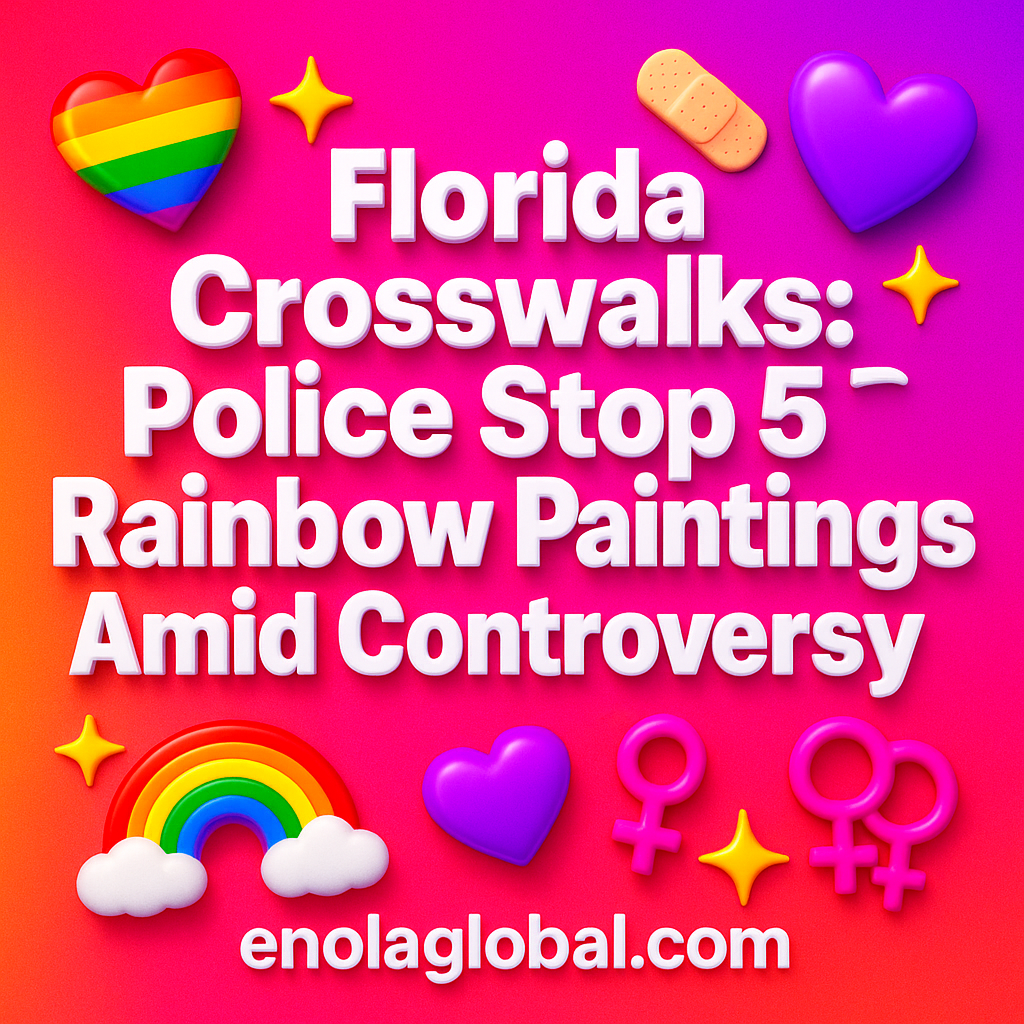
A fierce battle over Florida crosswalks is unfolding in Orlando, where police have stopped five rainbow-painted crosswalks amid state efforts to erase Pride symbols. This post breaks down the escalating conflict at the Pulse memorial—a site honoring the 2016 massacre of 49 LGBTQ+ people—and how residents continue to defy removal orders. Expect a detailed look at the state’s directive led by Transportation Secretary Sean Duffy, the deployment of multiple police squad cars guarding painted streets, and local communities’ bold, ongoing resistance to protect LGBTQ+ visibility despite increasing enforcement. This clash spotlights Florida’s broader cultural fight over identity and public space.
What led to police stopping 5 rainbow-painted Florida crosswalks?
The escalation began when Florida’s Department of Transportation, under the leadership of Secretary Sean Duffy, ordered the removal of rainbow-colored street paintings statewide, starting with Orlando’s Pulse memorial. Within days, crews painted over the rainbow crosswalks in harsh black and white. However, local residents and activists persistently defied these orders, restoring the colors by hand, often overnight. This sparked a back-and-forth of painting and repainting that challenged state authority directly on public streets.
As tensions rose, police involvement became necessary from the state’s perspective to enforce the removal, leading to the deployment of multiple squad cars guarding the previously vibrant crosswalks. The state framed this as a matter of “public safety,” but the aggressive policing of simple painted stripes signals something far more charged: a clash over identity, visibility, and control of public space. Those 5 rainbow-painted Florida crosswalks became a flashpoint in this cultural standoff.
How does Florida’s state directive target Pride symbols on public streets?
Florida’s directive explicitly demands the removal of all Pride-related imagery from public roadways, categorizing these symbols as unauthorized or improper for government property. Transportation Secretary Sean Duffy’s letters to all 50 governors called for a widespread erasure of Pride crosswalks, declaring these colorful displays a violation of state regulations or “safety hazards.” Florida led the charge by swiftly painting over numerous rainbow crosswalks, including the most visible one at Orlando’s Pulse memorial.
The directive does not merely remove paint but discourages any future displays tied to LGBTQ+ identity. This approach weaponizes state authority to silence Pride expression under the guise of standardizing crosswalk colors. It reflects a broader political agenda aimed at erasing LGBTQ+ presence from government spaces, signaling to local jurisdictions that such symbols are unwelcome, regardless of their cultural or memorial significance. More details on the state’s approach to public displays are available at the Florida Department of Transportation website.
Why is the Pulse memorial a key battleground for LGBTQ+ visibility?
The Pulse nightclub massacre remains one of the deadliest acts of anti-LGBTQ+ violence in U.S. history, claiming 49 lives in 2016. The Pulse memorial in Orlando is not just a public space—it’s a profound symbol of remembrance, resilience, and community identity for LGBTQ+ people nationwide. The rainbow crosswalk painted there serves as a visual tribute and a marker of continued visibility amidst ongoing struggles.
By targeting the Pulse memorial crosswalk, the state directly confronts a powerful symbol of LGBTQ+ survival and remembrance. Removing or policing these colors feels like an attempt to rewrite history and diminish the communal grief and pride embedded in that space. This location’s importance lies in its emotional weight and its role as a rallying point for activism, making it the perfect site for those defending the right to be seen and remembered.
How are local communities resisting the removal of rainbow crosswalks?
Residents and activists across Florida have embraced creative and persistent resistance tactics. After state crews paint over rainbow crosswalks, community members return with chalk or brushes to restore colors by hand. This grassroots effort extends beyond the Pulse memorial, spreading to neighborhoods like Miami Beach and Ybor City, where citizens repurpose public streets as canvases of defiance.
Resistance also includes legal challenges and public advocacy. Some local officials vocally oppose the state’s erasure policies and vow to protect at least some Pride crosswalks from removal. This community-driven persistence sends a clear message: LGBTQ+ visibility will not be erased quietly. The continued repainting symbolizes both hopeful resistance and refusal to allow state directives to erase identities or histories.
- Nighttime chalking campaigns to quickly restore colors
- Public demonstrations at key crosswalk sites
- Legal statements and advocacy from LGBTQ+ organizations
- Support from local elected officials
What role do police and state resources play in enforcing crosswalk changes?
The state’s deployment of multiple police squad cars to monitor a single crosswalk signals an outsized allocation of law enforcement resources. Ostensibly justified as addressing “safety concerns,” the police presence primarily serves to physically prevent residents from repainting rainbow colors. This use of policing shows Florida’s willingness to militarize public streets to enforce cultural conformity.
Critics, including local lawmakers, call this enforcement a “misallocation” of resources. Instead of addressing real public safety issues like potholes or violent crime, Florida is investing manpower in removing symbolic resistance. This tactic aims to intimidate communities, suppress activism, and reinforce the state’s message that Pride symbols are unwelcome. Details on the policing controversy appear in reports by outlets like CNN.
Can Florida’s actions to erase Pride crosswalks succeed against public opposition?
Despite aggressive state action, Florida faces formidable public opposition that questions the sustainability of the erasure campaign. Residents’ rapid repainting efforts and mobilized advocacy make clear that this fight will not be settled through paint alone. The state may succeed temporarily in removing rainbow artwork, but it cannot erase the community spirit and identity that inspire these displays.
The state also risks backlash as resources are diverted to policing symbols instead of addressing pressing community needs. Florida’s attempt to silence Pride crosswalks clashes with a growing, determined public that refuses to let their presence be minimized. In the long term, this cultural conflict suggests that erasing visibility on streets will face persistent grassroots resistance.
What does this conflict reveal about Florida’s cultural fight over public spaces?
This intense dispute over Florida crosswalks exposes a larger battle over who controls public spaces and whose identities are acknowledged there. The state’s directive to remove Pride symbols underscores an effort to erase LGBTQ+ visibility from government-managed areas, turning streets into contested cultural battlegrounds. This is not about paint—it’s about power and representation.
The conflict highlights a broader cultural war in Florida, where policies target marginalized communities through laws, education bans, and now even public art. It reveals a government prioritizing symbolic repression over community well-being, ignoring calls for inclusivity and justice. The ongoing standoff over rainbow crosswalks is a microcosm of deep social fractures demanding urgent public attention.
Key Takeaway
The fight over Florida’s rainbow crosswalks reveals more than a clash over paint—it underscores a determined community’s refusal to erase LGBTQ+ visibility and memory, especially in sacred spaces like the Pulse memorial. While the state uses policing and directives to enforce conformity, grassroots resistance shows that identity and pride cannot be suppressed by policy alone. This ongoing battle signals a broader struggle for who controls public narratives and space. Stay connected with the latest in queer voices, cultural shifts, and investigative reporting through Enola Global News, and log in to engage—readers can comment or like after engaging.