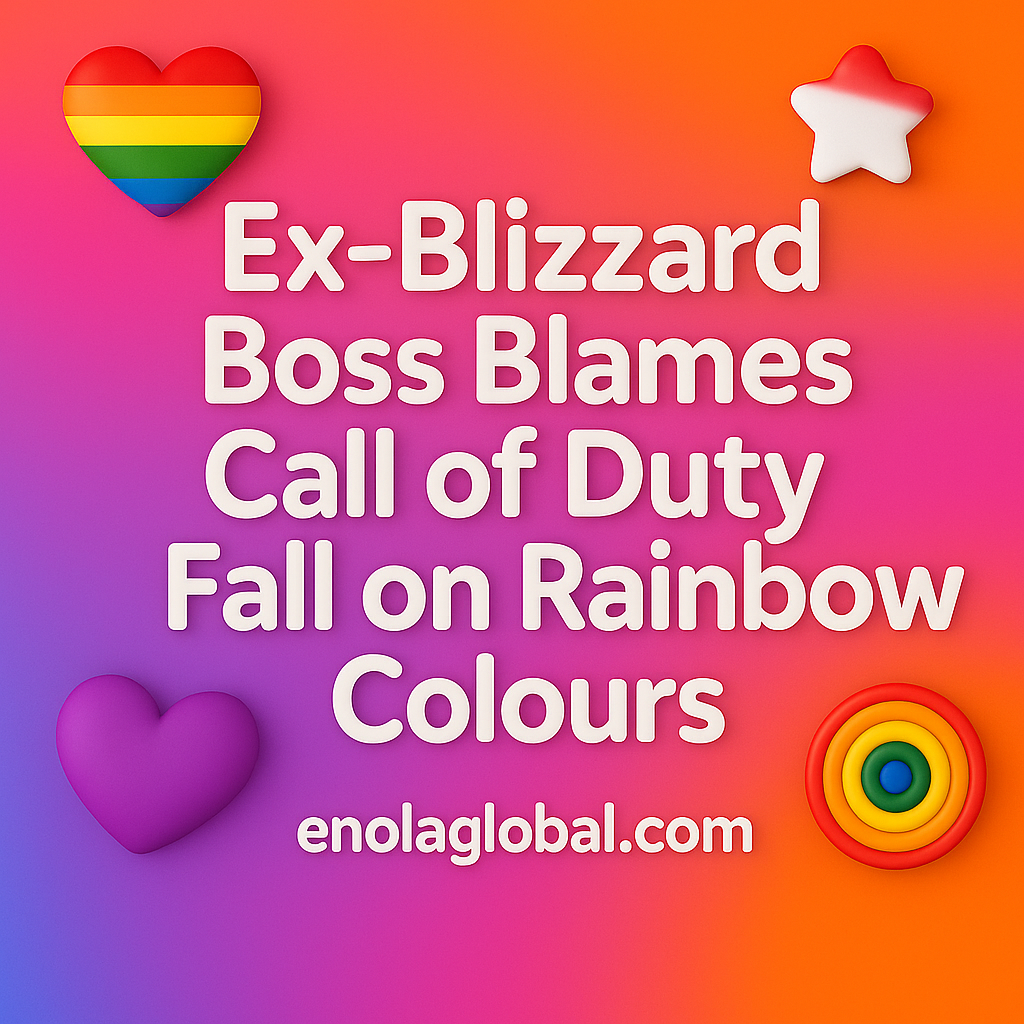
The Call of Duty rainbow controversy flared after former Blizzard president Mike Ybarra said “rainbow colours” helped drive down the series’ player numbers. He also predicted EA’s upcoming Battlefield 6 would “stomp” the next Call of Duty entry, framing competition as the cure for the franchise’s slide. The remark landed in a gaming community already debating Pride-themed cosmetics, cheating, and bloated installs.
Call Duty rainbow controversy: what Ybarra actually claimed
In a series of posts on X, Ybarra argued that Call of Duty has “gone downhill,” citing cheating, long load times, a “heavy UI/install,” and, without explanation, “rainbow colours.” He suggested Battlefield 6 would “boot stomp” the next Call of Duty release and force positive change. It’s a blunt take that mixes operational issues players routinely complain about with a cultural flashpoint.
What did he mean by “rainbow colours”? The franchise has released Pride-adjacent items before—flag calling cards and bright camos among them—and the series’ 2024 Pride Month skins prompted mixed reactions from fans. But “rainbow colours” is a vague stand-in, and reducing multi-year engagement challenges to a palette choice is, at best, incomplete.
Player numbers, performance, and context beyond the Call Duty rainbow controversy
Yes, concurrent player counts for individual Call of Duty titles tend to taper as cycles wind down—this has been a franchise pattern. Yet Call of Duty: Black Ops 6 still achieved the biggest launch weekend in series history and was the best-selling game in the US last year. That success undercuts the idea that inclusive cosmetics are an existential business threat.
There are more grounded reasons players churn: rampant cheating softens competitive integrity; giant downloads and patches clog drives; confusing menus slow people down; and annualized releases split attention. These are measurable friction points. Blaming inclusivity lets fixable problems off the hook.
Call Duty rainbow controversy: how Pride skins fit into the franchise
Call of Duty has experimented with vibrant cosmetics and cultural crossovers for years. Modern Warfare II added calling cards styled after Pride, asexual, trans, lesbian, bisexual, pansexual, and non-binary flags. The series has also sold eye-popping operators and skins—think Nicki Minaj, Skeletor, and even an orangutan—which some fans adore and others dismiss as off-tone.
Here’s the thing: visibility isn’t a gimmick; it’s an invitation. Cosmetic representation signals to LGBTQ+ players—and anyone who loves someone queer—that their presence is seen. You can critique aesthetic fit without scapegoating a community. Games are sandboxes for self-expression, and cosmetic diversity harms no one’s K/D.
What is coming next for Black Ops 7 and Battlefield 6
Blizzard unveiled Black Ops 7 in June. Reports say it’s set in 2035, a decade after Black Ops II, following agents hunting a manipulative enemy who weaponizes fear. Expect a single-player and co-op campaign, plus multiplayer and zombies modes.
While developers haven’t shared the exact date, reporting points to late October or early November. The game is expected on Xbox Series X/S, Xbox One, PS5, PS4, and PC, with Xbox Game Pass available on day one. On the other side of the ring, Battlefield 6 is slated for an October 10 release, setting the stage for a lively fall FPS season.
Call Duty rainbow controversy: does inclusive cosmetic content hurt sales?
Nothing in the public data shows a direct hit from inclusive skins; in fact, the series’ latest entry broke franchise launch records and led US sales. The Call Duty rainbow controversy conflates taste with performance, when the recurring business risks players cite most are cheating, unstable netcode, sprawling downloads, and UX friction.
Call Duty rainbow controversy: is this just a marketing distraction?
It can be. Framing Pride-adjacent cosmetics as the problem is a convenient way to ignore fixable technical issues and community management gaps. The Call Duty rainbow controversy grabs headlines, but long-term trust is won by anti-cheat investment, better onboarding, and clear, consistent support for everyone who picks up a controller.
What else explains the friction fans feel today
Big live-service games juggle massive content pipelines, licensing deals, balance patches, and ever-faster hardware cycles. When any of that slips, players notice. They also compare everything to their most nostalgic peak—lobbies with friends, perfect meta moments—and the present rarely lives up to memory.
That doesn’t make critique invalid. It means solutions should be practical: reduce install bloat, streamline UI, communicate roadmaps clearly, and keep anti-cheat relentless. None of that requires walking back inclusive cosmetics or telling queer players to shrink themselves.
What inclusive design looks like in practice
Inclusive design is about options. Turn off flashy tracers. Hide mass event banners. Equip subtle weapon skins. Let players filter lobby cards if they prefer minimal visuals. Give the community toggles and it will craft its own balance between identity and immersion.
And keep the door open. The best multiplayer communities are the ones where new voices can join, learn, and stay. Culture thrives when it’s big enough for everyone, including the LGBTQ+ players who’ve been here since LAN parties and net cafes, even when games didn’t say their names out loud.
Want updates as the fall FPS showdown unfolds? Follow our news coverage for more analysis and reporting. However you feel about cosmetics, it’s clear the Call Duty rainbow controversy is no substitute for real fixes that make games fairer, faster, and more fun.
Where the debate should land before launch day
It’s fair to debate tone and art direction. It’s necessary to demand tighter security, smarter onboarding, and smaller downloads. It’s vital to keep the community safe and welcoming. Do all of that—and let the Call Duty rainbow controversy fade into the background where it belongs: behind great gameplay.
Final Words
At the end of the day, the Call of Duty rainbow controversy says more about distraction than decline. Pride-themed skins are not the reason players leave; persistent cheating, heavy installs, and muddled UX are. Inclusive cosmetics expand the player base rather than shrink it, and the franchise’s record-breaking sales prove as much. The real challenge—and opportunity—lies in building a smoother, fairer, more welcoming game for everyone. For deeper coverage of gaming, culture, and LGBTQ+ visibility, visit our News section at Enola Global.