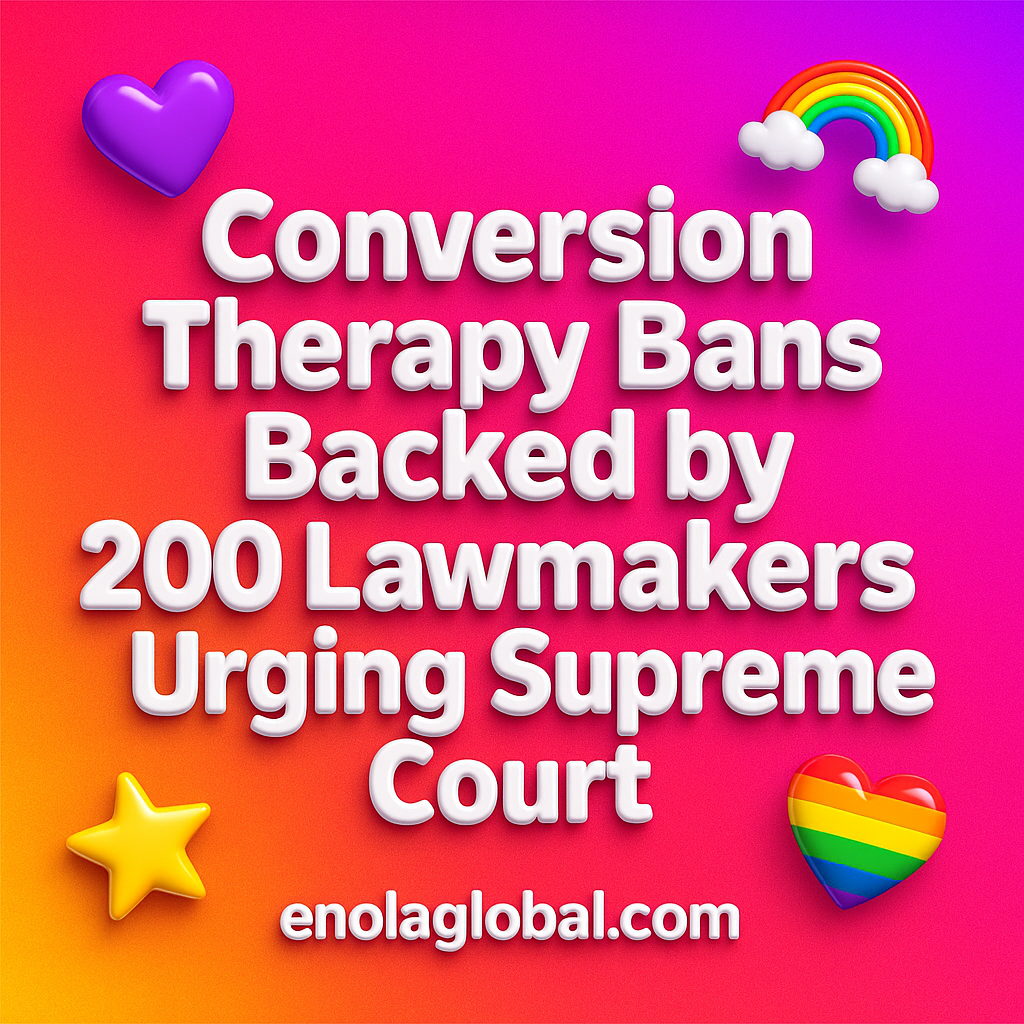
On Monday, 200 lawmakers joined forces to support conversion therapy bans by filing a friend of the court brief to the U.S. Supreme Court in Chiles v. Salazar. This case challenges Colorado’s law that prohibits licensed therapists from subjecting minors to discredited conversion therapy, a practice linked to increased suicide risks. Led by California representatives Mark Takano and Ted Lieu and Oregon Senator Jeff Merkley, the effort highlights the stakes for states protecting young LGBTQ+ people from harmful, fraudulent treatments. With oral arguments scheduled for October 7, this moment will shape whether states can continue regulating mental health care to ban these dangerous practices nationwide.
What Are Conversion Therapy Bans and Why Do They Matter?
Conversion therapy bans prohibit licensed therapists from using pseudoscientific methods aimed at changing a person’s sexual orientation or gender identity. These laws specifically protect minors from harmful treatments that have been widely discredited by every major medical organization, including the American Psychological Association. Conversion therapy is not only ineffective but also causes severe psychological harm.
These bans matter because they prevent licensed professionals from engaging in practices that are linked to increased suicide rates, depression, and trauma among LGBTQ+ youth. Supporters see these laws as essential safeguards that affirm the dignity and identity of young people instead of subjecting them to abusive and fraudulent interventions.
For more details, see the American Psychological Association’s position on conversion therapy.
Who Are the 200 Lawmakers Supporting These Conversion Therapy Bans?
The bipartisan coalition of 200 lawmakers backing these conversion therapy bans includes prominent figures such as California Representatives Mark Takano and Ted Lieu, and Oregon Senator Jeff Merkley. This group spans 167 members of the House and 20 senators, including influential leaders like House Democratic Leader Hakeem Jeffries and Speaker Emerita Nancy Pelosi.
They represent a unified front against efforts to roll back protections for LGBTQ+ youth, emphasizing that this battle transcends politics. Their support reflects a commitment to science-based healthcare and the protection of vulnerable minors from dangerous, unproven therapies disguised as legitimate treatment.
How Does Colorado’s Law Regulate Conversion Therapy for Minors?
Colorado’s law targets licensed mental health providers, explicitly banning them from performing conversion therapy on minors. It focuses narrowly on interventions that seek to change a minor’s sexual orientation or gender identity but allows supportive counseling that affirms a youth’s understanding of themselves. The law does not regulate unlicensed religious counselors, though experts warn that such practices remain a risk to mental health.
This regulation is crafted to strike a balance—upholding minors’ rights to supportive care while prohibiting harmful, discredited methods. Its purpose is professional accountability rather than censorship, ensuring that therapists meet established ethical standards in treating young people.
What Risks Do Conversion Therapy Practices Pose to LGBTQ+ Youth?
Conversion therapy bans are grounded in overwhelming evidence that these treatments cause serious harm. Studies link conversion therapy to a significant increase in suicide attempts, depression, anxiety, and psychological trauma among LGBTQ+ youth. Techniques often include aversive interventions and false pathologies, which exacerbate mental health crises rather than resolve them.
Survivors recount abuse through methods like behavior modification, electroshock therapy, and shaming based on false beliefs. According to The Trevor Project, youth exposed to conversion therapy are more than twice as likely to attempt suicide multiple times. This highlights conversion therapy not as a legitimate care but as a dangerous practice endangering lives.
Can States Continue to Protect Minors If the Supreme Court Upholds These Bans?
If the Supreme Court upholds laws like Colorado’s, states will retain the authority to regulate licensed mental health professionals and enforce conversion therapy bans. This power is crucial to safeguarding minors from harmful practices and maintaining state-level healthcare standards. Upholding the bans supports states’ rights to protect vulnerable youth from scientifically disproven and damaging treatments.
Conversely, if the Court strikes down these regulations, states could lose the ability to prevent licensed therapists from performing conversion therapy, regardless of the indisputable evidence of harm. This would severely undermine state oversight of professional conduct and put thousands of LGBTQ+ youth at risk nationwide.
Recent rulings such as U.S. v. Skrmetti reflect an ongoing judicial focus on state powers in healthcare, underscoring the stakes involved in Chiles v. Salazar.
Why Is Broad Medical and Political Support Crucial for Conversion Therapy Bans?
Strong endorsement from medical institutions and lawmakers fortifies conversion therapy bans against legal and political challenges. Every major medical association—including the American Medical Association and American Psychological Association—condemns conversion therapy as unethical and harmful. This unified medical consensus reinforces the legitimacy and necessity of these laws.
Politically, broad support helps counter misinformation and organized campaigns seeking to repeal or weaken protections. The involvement of high-profile legislators raises public awareness and underscores that these bans are about protecting health, not restricting free speech or religious freedom.
Broad backing also ensures continuous pressure to close loopholes, address unlicensed practitioners, and educate families about the risks of conversion therapy.
What Arguments Are Used Against Conversion Therapy Bans and How Are They Addressed?
Opponents of conversion therapy bans often invoke free speech and religious freedom, claiming the bans silence therapists or restrict access to desired treatment. Some try to rebrand conversion therapy as “exploratory” or “supportive” counseling to skirt regulations. However, courts and medical experts clarify that professional regulations govern conduct, not speech, and that these bans target harmful practices, not protected expression.
Claims that conversion therapy offers legitimate help ignore the extensive evidence showing it causes profound harm to LGBTQ+ youth. Laws exclude unlicensed religious counseling to respect religious rights while still banning dangerous medical practices. This distinction addresses constitutional concerns while prioritizing youth safety.
For a comprehensive legal perspective, see the Lambda Legal analysis on conversion therapy bans.
Parting Perspective
The Supreme Court’s decision in Chiles v. Salazar will determine the future of state authority to protect LGBTQ+ youth from harmful conversion therapy. With overwhelming support from lawmakers and medical experts, these bans represent a critical safeguard for vulnerable minors. The outcome will influence not only legal precedent but also the wellbeing of countless young people nationwide. Stay informed about this evolving story and more by following our coverage for continued updates on LGBTQ+ culture, accountability journalism, and queer history at Enola Global News, and be part of the community, where you can comment or like after engaging.