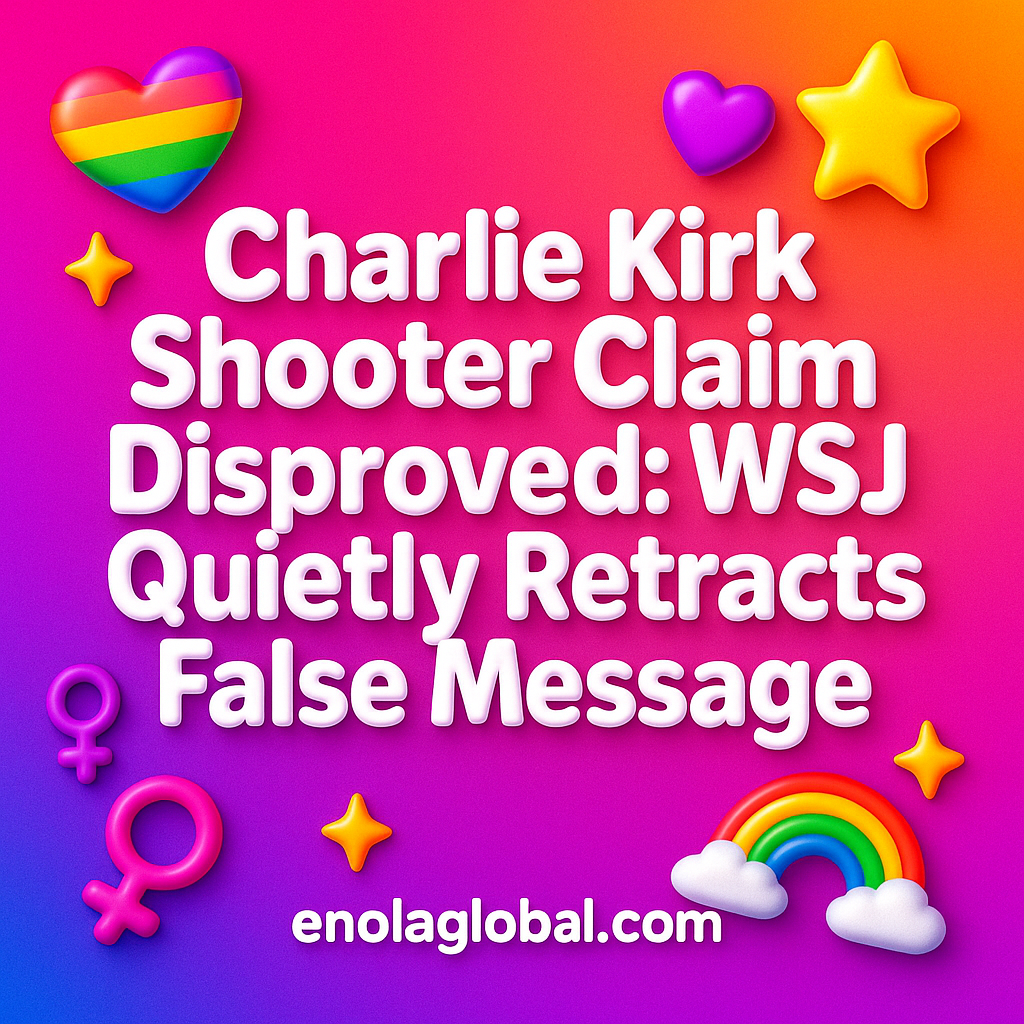
The Wall Street Journal has retracted its initial claim linking the Charlie Kirk shooter to transgender ideology, after Republican Utah Gov. Spencer Cox clarified the investigation. This update exposes how early, unverified reports fueled harmful misinformation targeting the LGBTQ+ community. Readers will find an analysis of the false narrative’s origins, the actual evidence from the crime scene, and responses from officials and advocacy groups condemning the rush to judgment. The arrest of Tyler Robinson, confirmed by Cox at a Friday press conference, marks a turning point in understanding the facts behind Kirk’s fatal shooting at Utah Valley University.
What Are the True Facts Behind the Charlie Kirk Shooter Case?
The investigation into the Charlie Kirk shooter reveals a stark contrast with early media accounts. Tyler Robinson, a 22-year-old former Utah State University student, was apprehended after the fatal shooting of conservative activist Charlie Kirk during a campus event at Utah Valley University. Contrary to initial reports linking the attack to transgender ideology, authorities clarified that the weapon contained ammunition engraved with meme culture and internet jokes, not political or ideological messages.
Robinson acted alone, and surveillance footage paired with eyewitness accounts support the timeline of him changing clothes multiple times before and after the shooting. This correction undercuts previous narratives that sought to politicize the crime prematurely and has refocused the investigation strictly on Robinson’s actions and motives. Accurate information is now shaping public understanding of this tragic event.
How Did the Wall Street Journal’s False Claim About the Shooter Spread?
The Wall Street Journal’s initial report suggested that the Charlie Kirk shooter’s weapon featured ammunition engraved with transgender and antifascist ideology. This narrative was based on an internal law enforcement bulletin, which was later acknowledged to be preliminary and possibly misinterpreted. Despite the lack of corroboration, this claim rapidly spread through right-wing commentators and social media, fueling a divisive and misleading discourse.
Notably, figures like Steven Crowder amplified these unverified claims to millions of followers, despite warnings from the Justice Department about the early and unvetted nature of the information. The Journal eventually modified its headline and quietly retracted parts of the story, but the damage from the initial publication had already been done, demonstrating how uncritical sharing of confidential or early-stage details can distort the truth and inflame tensions.
What Evidence Did Authorities Reveal About the Shooter and Weapon?
Authorities confirmed that Tyler Robinson used a bolt-action rifle wrapped in a towel during the shooting of Charlie Kirk. Important to debunking prior false claims, the recovered ammunition featured inscriptions such as “Hey fascist catch!” with arrows, the anti-fascist song lyric “Bella Ciao,” and internet meme phrases like “If you read this, U are gay LMAO” and “notices bulge, OwO what’s this?” These references are cultural memes prevalent in online communities rather than political manifestos or signals of transgender ideology.
Investigators emphasize that these engravings reflect internet humor and subcultural references, not ideological motives targeting any group in particular. Surveillance footage, eyewitness reports, and the suspect’s own behavior helped establish a clear timeline: Robinson arrived on campus, changed clothes on a rooftop, committed the shooting, then swapped back before fleeing. These details provide a more accurate and less politicized picture of the incident’s facts.
How Did Misinformation Impact the LGBTQ+ Community After the Shooting?
The false narrative linking the Charlie Kirk shooter to transgender ideology had immediate, harmful consequences for the LGBTQ+ community. A transgender woman in Seattle was falsely accused online of being the perpetrator, leading to harassment and threats. This type of scapegoating amplified fear and misinformation, deepening the community’s vulnerability in a moment of national tragedy.
Right-wing influencers and social media users circulated unverified claims, inciting hostility that escalated threats against transgender individuals already at heightened risk of violence. This misdirection distracted from the reality of gun violence and made public safety and justice more difficult to achieve. The situation highlighted how misinformation targeting marginalized groups can cause real-world harm beyond reputational damage.
What Responses Have Officials and Advocacy Groups Made to This False Narrative?
Officials and advocacy groups quickly condemned the rush to judgment and the irresponsible spread of misinformation about the Charlie Kirk shooter. Utah Gov. Spencer Cox labeled Kirk’s death a “political assassination” while criticizing social media’s role in spreading falsehoods. Organizations like GLAAD and the American Civil Liberties Union demanded that media outlets issue retractions and apologies for publishing unverified claims that smeared the LGBTQ+ community.
Statements from the Human Rights Campaign underscored the recklessness of spreading unfounded rumors, which fueled threats and terror among transgender people. GLAAD called for rigorous journalistic standards and emphasized that media must avoid using anonymous or dubious sources that perpetuate harmful stereotypes. These collective responses underline the urgent need for accountability in reporting on sensitive incidents to protect marginalized communities.
Why Is Responsible Reporting Crucial in Cases Like the Charlie Kirk Shooting?
Responsible reporting is essential when covering incidents like the Charlie Kirk shooter case to prevent misinformation from inflaming social divisions or unfairly targeting vulnerable groups. Early dissemination of unverified details led to a harmful narrative that falsely connected a violent act to the transgender community, exacerbating stigmatization and endangering lives.
Journalistic integrity demands that reporters verify facts rigorously and consider the broader implications of the information they publish. Misinformation not only undermines public trust but also weaponizes tragedy against marginalized populations. A failure to scrutinize leaks or anonymous sources can have lasting destructive consequences for community cohesion and the pursuit of truth. Upholding these standards is non-negotiable in a polarized environment.
Utah Update: What Does Tyler Robinson’s Arrest Mean for the Investigation?
The arrest of Tyler Robinson in Utah marked a pivotal development in clarifying the facts surrounding the Charlie Kirk shooter case. Authorities have confirmed that Robinson acted alone, dispelling earlier theories of political or ideological conspiracies. His capture, facilitated by his family and friend, allows investigators to focus on motive and circumstances rather than speculation.
Gov. Spencer Cox urged calm and rationality, warning against social media-induced escalation. Robinson’s apprehension opens the path for a more transparent and evidence-based inquiry, offering a chance to address the incident as a criminal tragedy rather than a cultural flashpoint. This update emphasizes the importance of restraint and verified information in ongoing coverage of the case. For more details on the investigation, see the Department of Justice.
Key Takeaway
The retraction of false claims about the Charlie Kirk shooter underscores the critical need for vigilance against misinformation that targets marginalized communities. Accurate, responsible journalism can prevent harmful narratives from spreading and protect LGBTQ+ individuals from unjust scrutiny. Moving forward, focusing on verified facts is essential to uphold public trust and promote justice. For continued updates on LGBTQ+ culture, accountability journalism, and queer history, follow our coverage at Enola Global News, and join the discussion where you can comment or like after engaging.