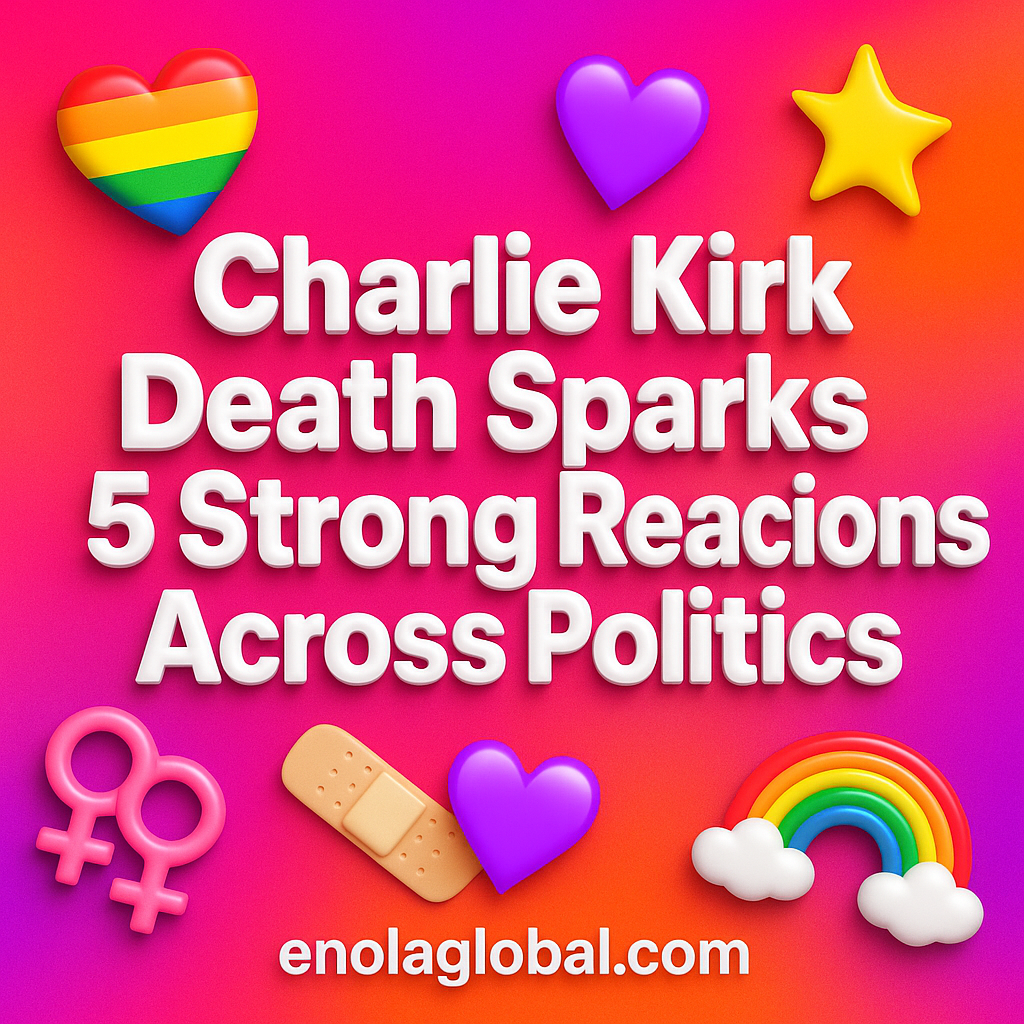
The shooting and death of Charlie Kirk at Utah Valley University on Wednesday sparked 5 strong reactions across the political spectrum. This post breaks down the immediate responses from former presidents, civil rights groups, and LGBTQ+ advocates, highlighting the rare near-unanimity condemning the violence and addressing Kirk’s controversial far-right activism. As authorities locked down the Orem campus following the attack during Kirk’s “American Comeback Tour,” leaders emphasized the urgent need to end political violence and acknowledge the damage caused by his rhetoric targeting transgender people. Expect a detailed look at the incident, the key voices reacting, and the broader political fallout from this shocking event.
What Happened During the Charlie Kirk Death Incident at UVU?
The Charlie Kirk death unfolded abruptly at Utah Valley University (UVU) as the activist was speaking during his “American Comeback Tour.” A gunshot struck Kirk in the neck while addressing a crowd on campus, immediately sparking chaos and panic. Students scattered as campus security and law enforcement locked down the Orem university grounds, launching an intense manhunt for the shooter. Witnesses described the scene as terrifying, with graphic videos capturing the moment violence erupted amidst what began as a politically charged event.
Authorities confirmed Kirk’s fatal injuries, and campus officials worked quickly to contain the situation and care for those affected. Despite efforts to stabilize him, Kirk succumbed to his wounds on site, ending the life of a prominent but divisive figure in American conservative activism. The incident has since ignited wide-ranging outrage and debate nationwide.
Which 5 Political Groups Reacted Strongly to Charlie Kirk’s Death?
Five key political groups voiced immediate, strong reactions to the Charlie Kirk death across the nation. These groups represent a broad spectrum of political and social views but united in condemning the violence while reflecting on Kirk’s polarized legacy.
- Former presidents and their administrations
- Civil rights organizations
- LGBTQ+ advocacy groups
- Mainstream conservative leaders
- Progressive activists and lawmakers
Each criticized the act as an unacceptable form of political violence, called for calm, and emphasized the complex consequences of Kirk’s far-right rhetoric targeting transgender individuals. Their united condemnation signals a rare moment where political divides momentarily give way to shared concern over escalating brutality.
How Did Former Presidents Respond to the Shooting at Utah Valley?
Former presidents responded swiftly and publicly to the shooting at Utah Valley, condemning the act as reprehensible while acknowledging the need to combat political violence nationwide. Donald Trump confirmed Kirk died from his injuries, urging an end to such violent acts. Barack Obama and Joe Biden’s statements stressed prayers for the family and a unified stand against the toxicity fueling these tragedies.
Their remarks consistently focused on refusing to let violence define America’s political discourse, stressing “there is no place in our country for this kind of violence.” Former First Ladies also offered support to Kirk’s family, highlighting the human toll behind political division. These responses balance condemnation of violence with calls for broader reflection on political toxicity.
What Are LGBTQ+ Advocates Saying About Kirk’s Controversial Rhetoric?
LGBTQ+ advocates have condemned the shooting while unflinchingly addressing Charlie Kirk’s controversial impact on queer rights. Groups like GLAAD emphasize that although political violence is unacceptable, Kirk’s rhetoric actively spread harmful disinformation about transgender people, blaming them for societal issues and inciting hostility.
The Human Rights Campaign highlighted Kirk’s role in promoting anti-transgender narratives through Turning Point USA’s campaigns and events, including alliances with far-right groups opposing evidence-based transgender healthcare. Advocates stress that while nobody should fear violence, society must also reckon with the consequences of persistent, targeted political hatred.
They urge leaders and platforms to prioritize safety over spreading disinformation and harmful agendas. Learn more at GLAAD.
Why Is Political Violence a Growing Concern Across the Spectrum?
Political violence, exemplified by the Charlie Kirk death, escalates concerns nationwide as polarization and hostility intensify. Extremist rhetoric from multiple sides has increasingly blurred lines between heated debate and physical confrontation. Trust in democratic institutions erodes as violence enters political arenas once dominated by speech and protest.
Experts warn this rising trend threatens national stability and democratic norms. Factors driving this growth include:
- Amplified misinformation and conspiracy theories
- Deepening ideological divides exploited by political actors
- Easy access to firearms and insufficient gun control
- Online radicalization heightened by social media
These dynamics create a volatile environment where political opponents become targets rather than collaborators.
What Immediate Actions Are Leaders Calling for After Kirk’s Death?
In the wake of the Charlie Kirk death, leaders across the political spectrum are demanding urgent action to curb political violence and gun-related incidents. Many stress the necessity of enhancing campus security, improving mental health resources, and adopting stricter gun control legislation to prevent similar tragedies.
Calls include:
- Unified condemnation of political violence from all parties
- Investments in violence prevention programs and threat assessments in educational institutions
- Reinforcing legal frameworks addressing hate speech and incitement to violence
- Promoting responsible political discourse by public figures to reduce inflammatory rhetoric
The immediate consensus is that protecting citizens from targeted political attacks requires systemic reforms and more accountable leadership. Visit Brady Campaign for advocacy efforts on gun violence prevention.
Can Political Dialogue Survive Amid Rising Violence and Polarization?
The tragic Charlie Kirk death raises profound questions about the future of political dialogue in America. With both brutal violence and extreme polarization surging, maintaining constructive conversation seems more challenging than ever. Many analysts argue that political discourse is at a crossroads: either evolve with mutual respect and fact-based debate or devolve into chaos driven by fear and hostility.
Restoring dialogue means addressing underlying animosities, promoting empathy, and rejecting dehumanizing rhetoric from all sides. Civic leaders and institutions have a critical role in modeling these values and safeguarding democratic processes. While difficult, rebuilding American political discourse is essential to prevent further tragedies fueled by division.
Parting Perspective
The death of Charlie Kirk has brought into sharp focus the escalating consequences of polarized political rhetoric and violence. As leaders and advocates demand urgent reforms, the path forward requires more than condemnation—it calls for genuine dialogue, accountability, and safer public spaces. For continued updates on LGBTQ+ culture, accountability journalism, and queer history, follow our coverage at Enola Global News. We invite you to join the discussion where you can comment or like after engaging and be part of shaping this critical conversation.