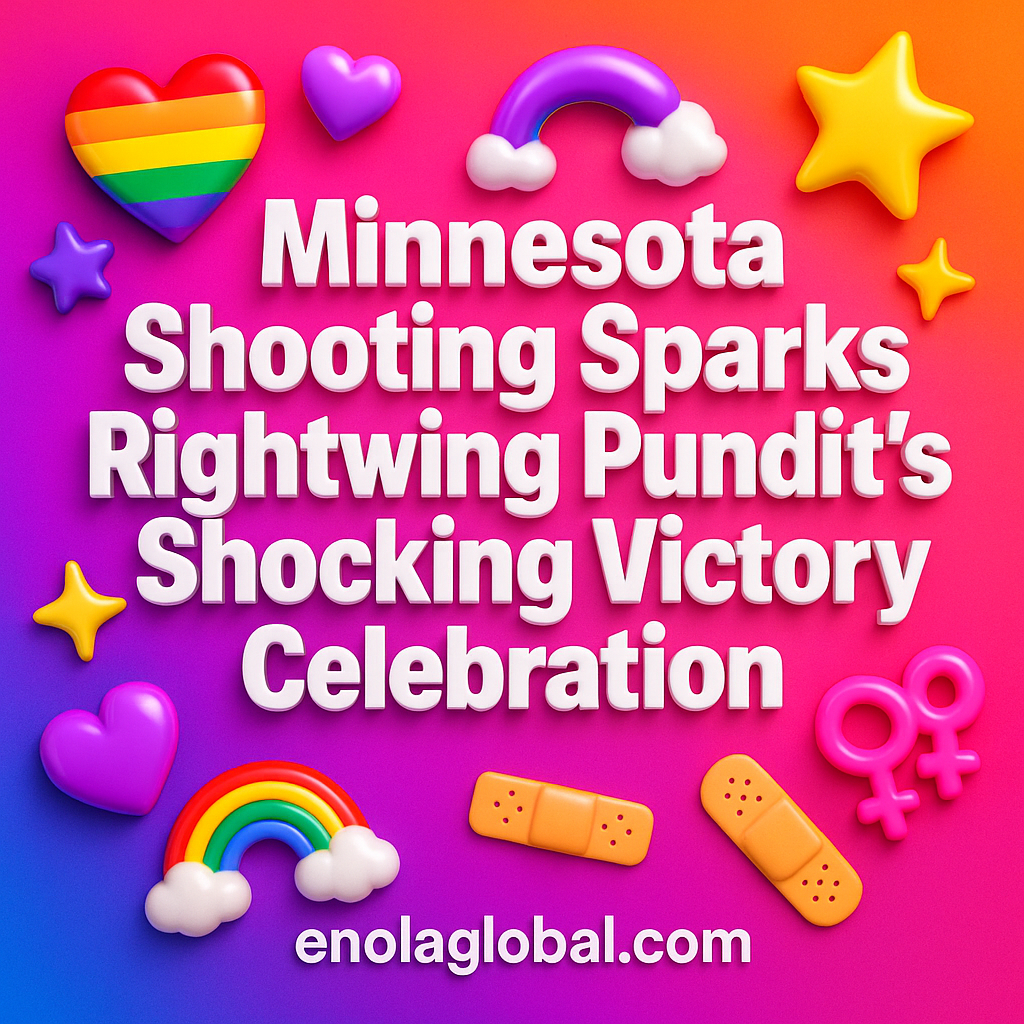
The recent Minnesota shooting reignited controversy as a rightwing pundit shockingly celebrated the violence, continuing a disturbing pattern of trivializing mass shootings where children perish. This post breaks down the implications of his actions, revealing how this behavior distorts public discourse and impacts survivors. You’ll gain insight into the broader cultural effects and the pundit’s track record of insensitivity, including specific instances that highlight his reckless rhetoric. The Minnesota shooting on April 4 escalated tensions nationwide, making an honest examination of this viewpoint crucial for understanding media responsibility and its role in shaping public outrage or apathy.
What Really Happened in the Minnesota Shooting Incident?
The Minnesota shooting unfolded on April 4 when an armed individual opened fire in a public location, tragically claiming multiple lives and injuring others, including children. Authorities quickly responded, but the damage was irreversible, sparking immediate local and national shock. Law enforcement confirmed the suspect’s identity and motive are under investigation, with preliminary reports suggesting a confluence of personal grievances and ideological extremism.
This horrific event did not occur in isolation; it is part of a disturbing trend of mass shootings in the U.S. The incident reopened wounds in communities already devastated by gun violence, illustrating a failure to address deeper systemic issues like mental health support and firearm accessibility. For more detailed updates on official proceedings, visit FBI Mass Violence Division.
Why Did the Rightwing Pundit Celebrate This Tragedy?
The rightwing pundit’s celebratory reaction to the Minnesota shooting was shocking but fits a troubling pattern of his public expressions. Rather than condemning violence, he framed the tragedy as a form of political or social victory, exploiting the event to mock opponents or advance a divisive narrative. This response not only dehumanizes victims but weaponizes the suffering for rhetorical gain.
Experts suggest this behavior stems from a strategic effort to provoke outrage and galvanize a specific audience by normalizing violence as contestation rather than tragedy. His online commentary reflects a disdain for empathy, favoring shock value over responsible engagement. This approach undermines sincere discourse and deepens ideological divides.
How Does Celebrating Violence Affect Survivors and Families?
Celebrating violence after the Minnesota shooting inflicts profound harm on survivors and families. It retraumatizes victims, twisting grief into a spectacle of cruelty. This mockery obstructs healing by invalidating the pain and struggles endured by those left behind. For families, such reactions are not just distractions but active wounds that hinder recovery.
Survivors also face stigmatization and isolation when public figures dismiss or endorse the violence they endured. Mental health professionals warn that this can increase risks of depression, anxiety, and PTSD. Community leaders emphasize that empathetic support, not cynical celebration, is essential to fostering resilience and solidarity.
What Is the Broader Cultural Impact of Downplaying Mass Shootings?
Downplaying mass shootings like the Minnesota shooting fosters cultural desensitization and cynicism. Repeated trivialization erodes public urgency to demand better gun laws or mental health reforms, allowing the cycle of violence to continue. This complacency weakens collective values around human life and safety.
This distortion also polarizes society by shifting focus from prevention to partisan point-scoring. When tragedies become political fodder, meaningful dialogues stall, and broad coalitions for change disintegrate. The cultural numbness that follows emboldens dangerous rhetoric and undermines empathy, which is critical for social cohesion.
- Reduces public pressure on policymakers
- Increases normalization of violence
- Deepens ideological divides
- Suppresses survivor voices
Minnesota Shooting: How Media Responsibility Shapes Public Opinion
Media outlets play a critical role in framing the Minnesota shooting and influencing public perception. Responsible journalism demands factual, sensitive coverage that highlights the human cost rather than sensationalizing violence or amplifying extremist voices. Unfortunately, some platforms prioritize clicks over care, contributing to misinformation and polarization.
Balancing transparency with respect is essential. Journalists must avoid replicating the pundit’s reckless rhetoric and instead provide context that encourages informed discourse. Resources like the Poynter Institute’s guide on gun violence reporting offer valuable frameworks for ethical storytelling in these crises.
Can Public Discourse Shift to Prevent Trivializing Mass Violence?
Shifting public discourse to prevent trivializing events like the Minnesota shooting requires collective commitment. Media, political figures, and citizens must reject inflammatory narratives and instead prioritize empathy and accountability. Elevating survivor stories and community voices can humanize mass violence and promote solidarity.
Educational initiatives and social media policies targeting hate speech and violent glorification are tools for change. Encouraging critical media literacy also equips audiences to discern between constructive dialogue and provocative sensationalism, fostering a healthier public sphere resilient against manipulation.
What Examples Reveal the Pundit’s Pattern of Reckless Rhetoric?
The rightwing pundit’s past behavior shows a consistent pattern of reckless rhetoric surrounding mass shootings beyond the recent Minnesota shooting. He has previously dismissed tragedies involving children and marginalized groups, using inflammatory language to mock mourners and politicize suffering. This pattern has drawn widespread condemnation.
Specific instances include viral tweets celebrating earlier shootings, appearances on controversial outlets where he belittled victims, and public statements minimizing the necessity of gun control measures. This trajectory underscores how his commentary seeks to shock rather than contribute to solutions, reinforcing harmful narratives.
Key Takeaway
The disturbing celebration of violence by a rightwing pundit after the Minnesota shooting reveals a deeper erosion of empathy in public discourse, one that harms survivors and obstructs meaningful change. Addressing this rhetoric requires a collective shift toward accountability and respect for human life to prevent further normalization of such tragedies. Stay connected with the latest in queer voices, cultural shifts, and investigative reporting through Enola Global News and be part of the community where you can comment or like to engage with others.